| |
| Thursday, 12 November 2026 |
| 150 years of Liberty: Masterpieces of Design |
| Joanna Banham |
 |
Liberty of London is far more than just a shop; it is also a byword for luxury and innovation. Founded in 1876, at the height of the 19th century craze for all things Aesthetic and Japanese, it was an immediate success. Its Oriental textiles, Middle-Eastern rugs, and Artistic accessories and dress were widely admired and the shop was beloved by connoisseurs such as the painter James McNeill Whistler and the critic Oscar Wilde as well as by the cream of London's fashionable elite.
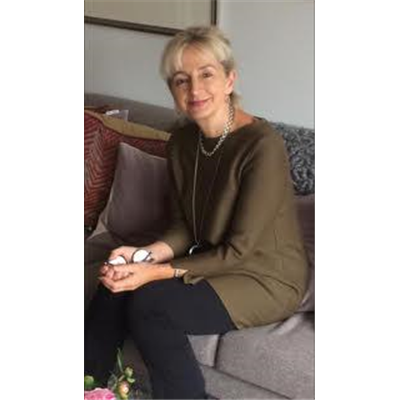
Jo Banham is a freelance curator, lecturer and writer. From 2006-2016 she was Head of Adult Learning at the Victoria & Albert Museum, and before that Head of Learning and Access at the National Portrait Gallery, and Head of Public Programmes at Tate Britain. She has also been Curator of Leighton House and Assistant Keeper at the Whitworth Art Gallery. She has published on many aspects of Victorian and early 20th century decoration and interiors. She recently curated an exhibition on William Morris and the Arts and Crafts Movement for the Juan March Fundacion in Madrid and the Museu Nacional d’Art Catalunya in Barcelona and she is currently writing a book on the History of Wallpaper. She is also Director of the Victorian Society Summer School. |
|
| Thursday, 10 December 2026 |
| The 12 plants of Christmas – the natural history, botany, and folklore of the plants that surround us at Christmas |
| Timothy Walker |
 |
Apart from the pear tree in which sat the partridge, there are no plants in the 12 days of Christmas according to the folk song. Sadly, even that reference is erroneous, because partridges are ground dwelling birds. And yet at Christmas we are surrounded by plants. This talk puts the record straight and rewrites the zoocentric song replacing partridges with poinsettias, and maids with mistletoe.
Timothy Walker read Botany at University College Oxford. After graduation, he worked as a trainee at Oxford Botanic Garden, the Savill Garden Windsor, and the Royal Botanic Gardens Kew. In 1985 he was awarded a Master of Horticulture by the Royal Horticultural Society of London. From 1988 to 2014 he was director (Horti Praefectus) at the Oxford Botanic Garden. Between 1992 & 2000 the OBGHA won 4 gold medals at the Chelsea Flower Show London. In 2009 the Botanic Garden was awarded a Queen’s Anniversary Prize for providing imaginative educational programmes for adults, students, children, and the general public, thereby breathing new life into education for people of all ages and enriching their lives. In 2010 he was elected as a Fellow of the Linnaean Society of London. In the same year he presented a 3-part series of films on the history of botany on BBC4. Since 2014 he has been a tutor in Plant Biology at Somerville College, Oxford. |
|
| Thursday, 14 January 2027 |
| Fancy Liquors and Sky-High Kickers: The Invention of Can-Can, 1830-1950
|
| Jonathan Conlin |
 |
French Can-Can has long been synonymous with the "Gay Paree" of the Moulin Rouge, immortalized by Parisian artists such as Henri de Toulouse-Lautrec. While researching the history of can-can Jonathan Conlin was surprised to discover that this famous dance, supposedly the "national dance" of the French, in fact owed its origin to London as much as Paris. In this lecture he will reveal how an unlikely Anglo-British, cross-Channel exchange of artists, impresarios and tourists led to the creation of can-can: a fusion of a revolutionary Parisian dance (the chahut) and London's rather more coy skirt-dancing. The talk is illustrated with colourful images of the Moulin Rouge, Alhambra Music Hall and other entertainment venues, as well as of famous London and French performers, from Jane Avril to the Tiller Girls.
Jonathan Conlin is a historian and author particularly interested in the history of great museums/collectors. All his talks draw on his own research, allowing him to take audiences behind the scenes: sharing the surprise discoveries as well as the questions that we still haven't been able to answer. In 2024 he wrote the National Gallery's official bicentenary history, and appeared alongside Claudia Winkleman and Michael Palin in 'My National Gallery', a film about the National Gallery, shown on ITV and in over 300 UK cinemas. Previous books include a biography of the oil baron and art collector Calouste Gulbenkian and a comparative history of Paris and London. These books have been praised for their readability and their research by the Sunday Times, Daily Mail, Spectator, New York Post and other mainstream media. Alongside lecturing for Arts Society groups, he also teaches, as Professor of Modern History at the University of Southampton. Born in New York, he studied History and Modern Languages at Oxford, subsequently moving to the Courtauld Institute and Cambridge for his MA and PhD. |
|
| Thursday, 11 February 2027 |
| The History of The City of London as told through its Stained Glass |
| Anna Warrillow |
 |
London's history is fascinating and full of colourful characters, from William Shakespeare to Dick Whittington's cat! In this lecture we gallop through almost 2000 years of London's history brilliantly illustrated through the stained glass windows found in the city churches and livery halls. Often overlooked, these provide a unique insight into the milestones which have made up London's story. As well as18th, 19th century and 20th century windows we look at some of the most up-to-date and contemporary glass makers. Anna also provides a list of windows and where they can be found so we can undertake a self-guided walk if we wish!
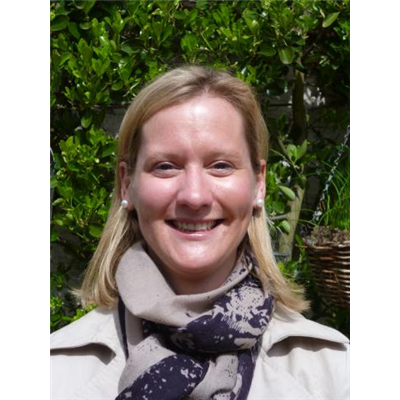
Anna Warrillow studied for a BA in History of Art & Italian at the University of Sussex and did MA in Renaissance Decorative Arts & Design at the Royal College of Art. She worked for 6 years as a curator in the Sculpture Department at the Victoria & Albert Museum as well as in smaller collections such as the Henry Moore Family Trust. As well as guiding, she is a lecturer at Richmond The American International University in London where she teachs undergraduates The History of London. She graduated as a Blue Badge Guide early in 2013. Since then she has been conducting bespoke private tours for discerning visitors to London. She established her own guiding company Canvas and Stone Tours in 2018 (www.canvasandstonetours.co.uk). Her background and passion is all things art and history. |
|
| Thursday, 11 March 2027 |
| Gold of the Gods: Treasures of South America and the Search for El Dorado |
| Chloe Sayer |
 |
Gold in South America had a spiritual importance. Its brilliance evoked the Sun — the golden disk that nourished the Earth. In Peru and Colombia, goldsmiths made some of the most spectacular treasures of the ancient world. Cast and hammered, gold was transformed into sacred offerings for tombs and temples. Europeans, by contrast, saw gold as a commodity — the ultimate symbol of wealth. For decades, Europeans searched in vain for El Dorado, the legendary Golden One. Although many golden treasures were melted down for bullion, magnificent works of art are preserved in the museums of Peru and Colombia.
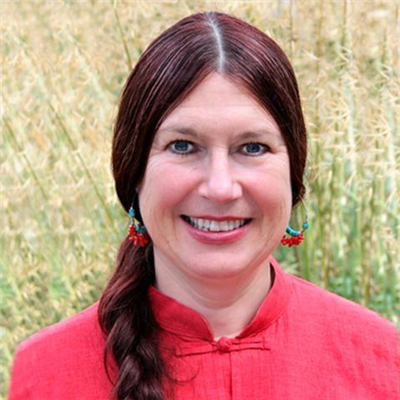
Chloe Sayer is a freelance specialist in the art and culture of Latin America. She has lectured in the UK, Canada, Ireland, Mexico, Australia and New Zealand, and has curated exhibitions, and assisted on TV documentaries for BBC and Channel 4. She has made collections in Mexico and Belize for the British Museum, and is Research Associate in the Department of World Cultures at the Royal Ontario Museum. In 2016 she was awarded the prestigious Ohtli medal by the Mexican government for her long-standing commitment to Mexican culture. Her many publications include Mexican Textiles (British Museum Press, 1990), Arts and Crafts of Mexico (Thames & Hudson, 1990), Focus on Aztecs and Incas (Watts Books, 1995), The Incas - The Ancient World (Wayland, 1998), Textiles from Mexico (British Museum Press, 2002), and Mexico: Clothing and Culture (Royal Ontario Museum, 2015). She has also published articles in travel guides, newspapers and magazines. |
|
| Thursday, 08 April 2027 |
| Chopin and the Polish Soul |
| Rosamund Bartlett |
 |
At the end of the 17th century Poland was the largest state in Europe, but within a hundred years it had been partitioned by its powerful neighbours and partly absorbed into the Russian empire. The Poles reacted to Russia’s brutal suppression of their 1830 Uprising by developing a strong cultural identity in which artists played a key role. This lecture shows how Chopin and his revolutionary Polonaises and Mazurkas came to be seen as an indispensable symbol of the Polish nation, both during his lifetime, and in the years before Poland regained its independence in 1918.
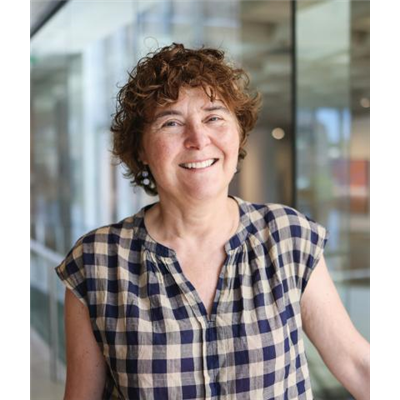
Rosamund Bartlett is a writer, lecturer and translator. Her work ranges across the arts, from painting to music, and across cultures, from Italy, France and Germany to the countries of Northern and Eastern Europe. She began her career as an academic in Slavic studies after completing her doctorate at Oxford, and has held fellowships both in the UK and at the European University Institute in Florence. She is an Honorary Research Fellow in the Faculty of Modern Languages in Oxford, and in 2024 became a Royal Literary Fund Fellow at Brasenose College. The author of several books, including biographies of Chekhov and Tolstoy, and a study of Wagner's influence in Russia, she is also well known as a translator - her publications include acclaimed editions of Anna Karenina and Chekhov's stories for Oxford World’s Classics. Over the years she has written on music, literature and drama for institutions including the Royal Opera House, the National Theatre and the Salzburg Festival, and about art for Apollo and The Burlington Magazine. She is currently writing a book about the revolution in the arts which took place in early 20th-century Russia, and its connection to modernist developments in Western Europe. She has led art, architecture, design and music tours throughout Europe, and contributes regularly to Proms events and opera broadcasts on the BBC. Her lecturing work has taken her from the Ashmolean Museum in Oxford, where she lives, to the Harriman Institute in New York, and the Art Gallery of New South Wales in Sydney. |
|
| Thursday, 13 May 2027 |
| Fashion in a Time of War (1939 - 1945) |
| Connie Gray |
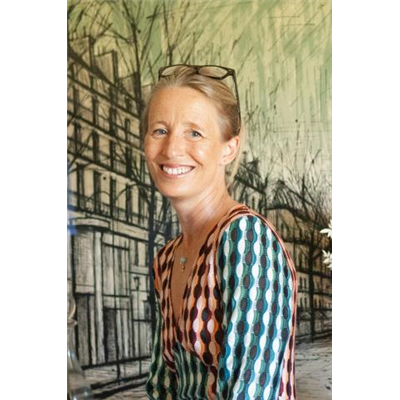 |
Fashion in a Time of War explores the role fashion designers played in London and Paris during the second World War. Names synonymous with elegance and style pre-war were to play significantly different roles during WWII, some better known than others. Coco Chanel took a German lover and was viewed as almost 'untouchable' until 1954, Hardy Amis became a British spy in Belgium and used the names of fashion accessories as code words to communicate with resistance groups, Lucien Lelong dressed the wives of the German high command during the occupation of Paris whilst working tirelessly to save the lives of thousands. British Vogue became an important part of the British propaganda effort whilst French Vogue ceased to be published. In this fascinating lecture the differing roles fashion played in the second World War will be explored, bringing a clarity to an industry that many considered frivolous in a time of war but in fact was hugely influential in the economic and artistic survival of France and Britain post war.
With a background in fashion and broadcasting, Connie Gray is the leading authority on the history of 20th-century fashion illustration. She is the author of GPP: One of a Kind (Gray M.C.A 2025), the definitive illustrated biography of Gladys Perint Palmer - the most influential female fashion artist of the modern era. As a curator, educator, and lecturer, she advises internationally on exhibition curation and collections research, and presents at institutions including Central Saint Martins and the Courtauld Institute of Art. Her research and writing focus on the evolution of fashion illustration, the visual rhetoric of wartime style, and the artistic legacies of key fashion artists. She has collaborated with major museums and archives on aquisition, conservation, and exhibition projects, including Pioneers of Fashion (Lee Miller Archives), Crown to Couture (Kensington Palace, London), and 100 Years of Fashion Illustration (Society of Illustrators, New York). |
|
| Thursday, 10 June 2027 |
| Mars and the Muses': the Renaissance Art of Armour |
| Tobias Capwell |
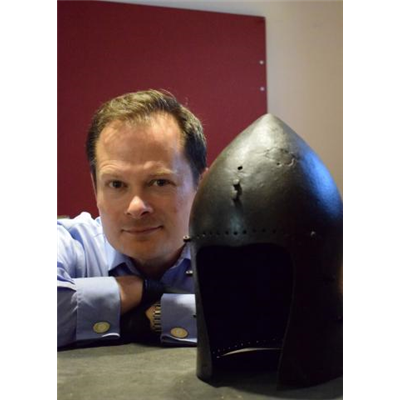 |
Armour was one of the most fundamental Renaissance art-forms. In the fifteenth and sixteenth centuries, most of the richest noblemen in Europe were dedicated patrons of the armourer’s art. Armour was a kind of visual language used to project aristocratic identity, prestige and power. The armour-making process demanded both fantastic skill in the sculpting of iron and steel and mastery of decorative techniques such as acid-etching and mercury-gilding. This lecture serves as an introduction to the subject of armour - protective equipment for fighting which was also, crucially, an expressive art-form. Here the the achievements of virtuoso armourer-artists embodied magnificence, while also radiating more complex and subtle messages - about status, noble associations, social order and divine power.
Toby Capwell is an independent scholar and leading authority on medieval and Renaissance arms and armour. Over the last thirty years he has worked with many of the world's great collections, including the Imperial Armoury in Vienna, the Metropolitan Museum of Art in New York, and the Royal Armouries in Leeds, and has served as curator of Glasgow Museums and the Wallace Collection, where he worked for sixteen years until January 2023. He is a Fellow of the Society of Antiquaries and a Freeman of the Worshipful Company of Armourers in London. He is the author of many books on armour, weapons and tournaments, has curated numerous exhibitions, and frequently appears in film, television and online media. |
|
| Thursday, 08 July 2027 |
| Same Old Same New |
| Aliki Braine |
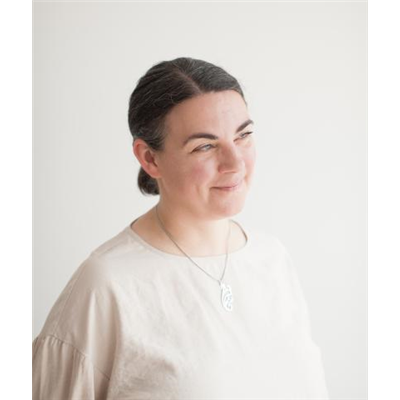 |
One might think that it is easy to spot the difference between contemporary and historical art, but what about what they have in common. Can old masters help us understand art works such as the infamous 'pile of bricks' or 'unmade bed'? This lecture explores whether the old masters can help us understand modern and contemporary works, and questions whether artists' intentions and strategies have really changed across the centuries.
Aliki Braine studied at The Ruskin School of Fine Art, Oxford, The Slade School and The Courtauld Institute where she was awarded a distinction for her masters in 17th century painting. She has been working for The National Gallery for 25 years and teaches for Christie’s Education, The Wallace Collection and numerous private clients. Aliki is also a practicing artist who regularly exhibits her photographic work internationally and has taught at Camberwell College of Art. |
|